politics
декабрь 25, 2025
Ortega sacrifica la economía de Nicaragua al reconocer zonas ocupadas por Rusia en Ucrania
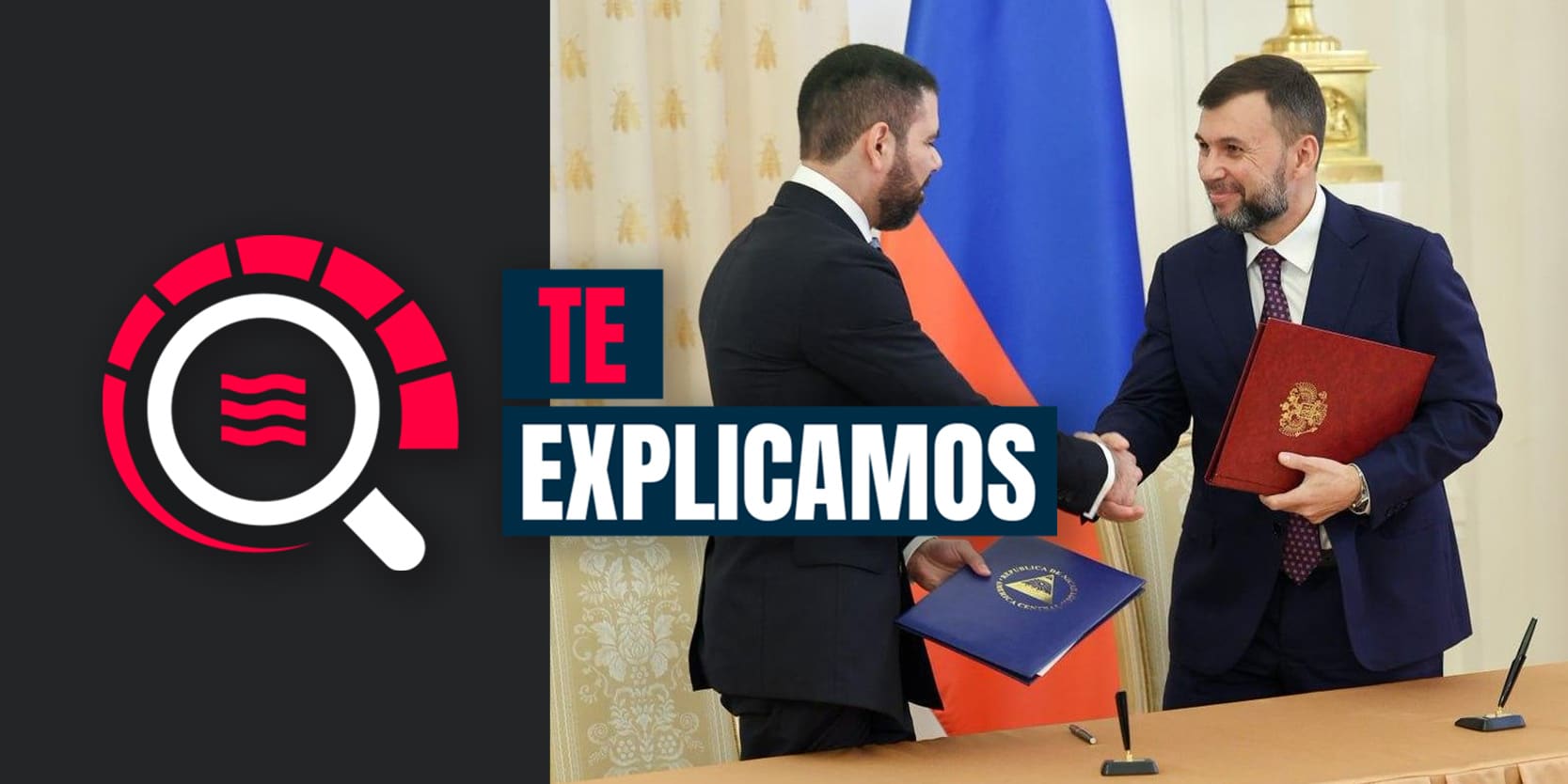
El régimen de Daniel Ortega y Rosario Murillo sigue sorprendiendo. Esta vez la Asamblea Legislativa controlada por operadores de la dictadura firmó dos acuerdos de cooperación con las autoproclamadas administraciones de territorios ucranianos ocupados, —la llamada República Popular de Donetsk, la ciudad de Sebastopol (Crimea), y ratificó convenios con la República Popular de Lugansk y […]
TL;DR
- Nicaragua signed cooperation agreements with the self-proclaimed administrations of Donetsk People's Republic, Sevastopol, Luhansk People's Republic, Zaporizhzhia, and Kherson.
- These agreements are interpreted as support for Russia's annexation of these Ukrainian territories.
- Nicaragua's actions led to the breaking of diplomatic relations with Ukraine in October.
- The unrecognized legal status of these territories poses risks of secondary sanctions from countries like the EU, Canada, and the US.
- Potential sanctions include trade prohibitions, asset freezes, and financial restrictions.
- Nicaragua faces difficulties in legal recourse and contract enforcement due to the lack of recognized courts in these territories.
- Challenges in insuring cargo, chartering freight, and guaranteeing transportation are also expected.
- Nicaragua aims to strengthen commercial ties through product exports and the opening of a chamber of commerce in Sevastopol.
- The regime also seeks alliances, technical assistance, and investments in education, technology, and culture as an alternate form of cooperation.
- Laureano Ortega reaffirmed Nicaragua's unconditional support for Russia, rejecting Western narratives.
- Agreements aim to expand commercial and economic cooperation, reduce trade barriers, facilitate investment, and create a stable legal framework.
- The rapprochement with Russia is seen as a political act of support that carries significant practical and legal risks.
The regime of Daniel Ortega and Rosario Murillo continues to surprise. This time, the Legislative Assembly controlled by operators of the dictatorship signed two cooperation agreements with the self-proclaimed administrations of occupied Ukrainian territories—the so-called Donetsk People's Republic, the city of Sevastopol (Crimea)—and ratified conventions with the Luhansk People's Republic and the regions of Zaporizhzhia and Kherson, in acts interpreted as a show of support for Russia's annexation of these areas.
These alliances led to the breaking of diplomatic relations with Ukraine in October, causing diplomatic tensions between both countries. "Ukraine has officially broken diplomatic relations with the Republic of Nicaragua," stated the Minister of Foreign Affairs, Andrii Sybiha, via his X account. Sybiha described the act of recognizing territories in dispute between Russia and his country as "a deliberate attempt to undermine Ukraine's sovereignty and territorial integrity, a gross violation of Ukraine's Constitution, the United Nations Charter, and fundamental principles of international law."
Why is it extremely risky for Nicaragua to do business with these administrations? We explain it in DiverCheck. The first issue is the lack of legal recognition and legitimate authority, as Donetsk and Sevastopol are not considered governments by most Western countries but rather territories occupied by the Russian invasion.
In Latin America, Nicaragua is the only country that recognizes and accepts their independence, followed by Russia, North Korea, and Syria, although many of these cases are partial or symbolic recognitions, while the United States, the European Union, and other states view them as illegal and maintain respect for Ukrainian sovereignty. This measure by the regime may continue to cost it contracts or relationships with multilateral organizations, organizations, and potential partners.
Another risk for Nicaragua is the potential application of secondary sanctions by the European Union, Canada, the United States, and other countries, which have imposed specific measures on Sevastopol and Donetsk, considering them zones not controlled by the Government of Ukraine. This implies trade prohibitions, asset freezes, and financial restrictions that invalidate normal commercial operations. If a transaction violates these international measures, Nicaragua could face fines and asset freezes.
On June 16 of this year, for example, the European Union renewed its sanctions until June 23, 2026, in response to the illegal annexation of Crimea and the city of Sevastopol by the Russian Federation. This situation leads to the absence of reliable transfers, lack of maritime and land insurance, absence of bank guarantees, restrictions on operating with Western banks, and the impossibility of accessing secure markets.
Nicaragua would also not have a real possibility to litigate or enforce a judgment in case of contractual breach, because in occupied territories, there are no recognized courts or valid enforcement mechanisms.
Furthermore, the risk increases because countries that apply sanctions can block any related act, preventing the Government of Nicaragua—or private partners—from recovering their investments if the counterparty operates under an unrecognized administration. In other words, there is no legal certainty to resolve disputes.
Added to this are the difficulties in insuring cargo, chartering freight, or guaranteeing transportation due to instability and the lack of insurance coverage in disputed areas.
Lastly, Nicaragua would also not have a real possibility to litigate or enforce a judgment in case of contractual breach, because in occupied territories, there are no recognized courts or valid enforcement mechanisms.
Moreover, the risk increases because countries that apply sanctions can block any related act, preventing the Government of Nicaragua—or private partners—from recovering their investments if the counterparty operates under an unrecognized administration. In other words, there is no legal certainty to resolve disputes.
Added to this are the difficulties in insuring cargo, chartering freight, or guaranteeing transportation due to instability and the lack of insurance coverage in disputed areas. As happened with former Russian minister Dmitrii Ovsiannikov, who in April 2025 became the first person to be convicted in the United Kingdom for evading sanctions imposed after the illegal annexation of Crimea from Ukraine in 2014. He was appointed governor of Sevastopol in Crimea by Russian President Vladimir Putin in 2016. He used a British bank account to illegally receive tens of thousands of pounds from his wife and accepted gifts and payments from his brother, prosecutors said, according to the AP agency.
Nicaragua aims to strengthen these commercial ties with these disputed zones through product exports and the opening of the Nicaraguan Chamber of Commerce in Sevastopol, according to the Russian news agency TASS.
The regime's other expectation is to create alliances, technical assistance projects, and investments in education, technology, and culture, which for the Ortegas-Murillo is a kind of alternate cooperation, facing pressure from the United States.
Sevastopol Vice-Governor Maria Litovko highlighted in November 2025 that cooperation between Russia and Nicaragua is developing in various areas—from education and culture to the economy—and stressed that the exchange between schoolchildren strengthens ties between both countries and expands humanitarian collaboration. Among the project's plans is to continue expanding cooperation: the creation of a Russian language classroom in Matagalpa, new exchange programs, and the possibility for Nicaraguan students to visit Sevastopol and choose Russian universities to continue their studies.
The signing of alliances with both cities and the ratification of agreements with the Luhansk People's Republic and the regions of Zaporizhzhia and Kherson also represent, for the regime, an internal and external position, and a clear warning to the West, of being an "unaligned" actor and an ally of powers that challenge that order.
Laureano Ortega, presidential advisor of Nicaragua, reaffirmed unconditional support for Russia, rejecting Western historical manipulation and calling to defend the legacy of Soviet sacrifice against the resurgence of fascism. pic.twitter.com/PwAcEgj7WD
In the case of the Donetsk People's Republic, Nicaragua signed the agreement on November 26, 2025, according to deputies of the National Assembly, to expand and strengthen cooperation between both parties in the commercial and economic sphere on an equal footing, and according to the Sandinista media outlet 19 digital, it is done within the framework of Nicaraguan and Russian legislation and "in strengthening contemporary international law... with the objective of reducing existing barriers in trade, facilitating investment, and creating a stable legal framework that promotes the economic growth of the States Parties, as well as expanding reciprocal access to markets," said Sandinista deputy Loria Raquel Dixon.
With the government of Sevastopol, the agreement was also signed on November 26 in the National Assembly of Nicaragua, based on "cooperation in the economic and commercial, scientific and technological, social, and humanitarian spheres."
The rapprochement has been happening for years, but these agreements pave the way for the regime's intentions to strengthen ties with Russia. Signing agreements with the authorities of Donetsk or the administration of Sevastopol is, for Nicaragua, a political act of support for Russian policy that can bring small symbolic gains and bilateral cooperation. But from a practical and legal standpoint, opening the door to business involves high and real risks.