politics
январь 10, 2026
La caída de Maduro desata la paranoia del régimen Ortega-Murillo con vigilancia férrea y control de redes sociales
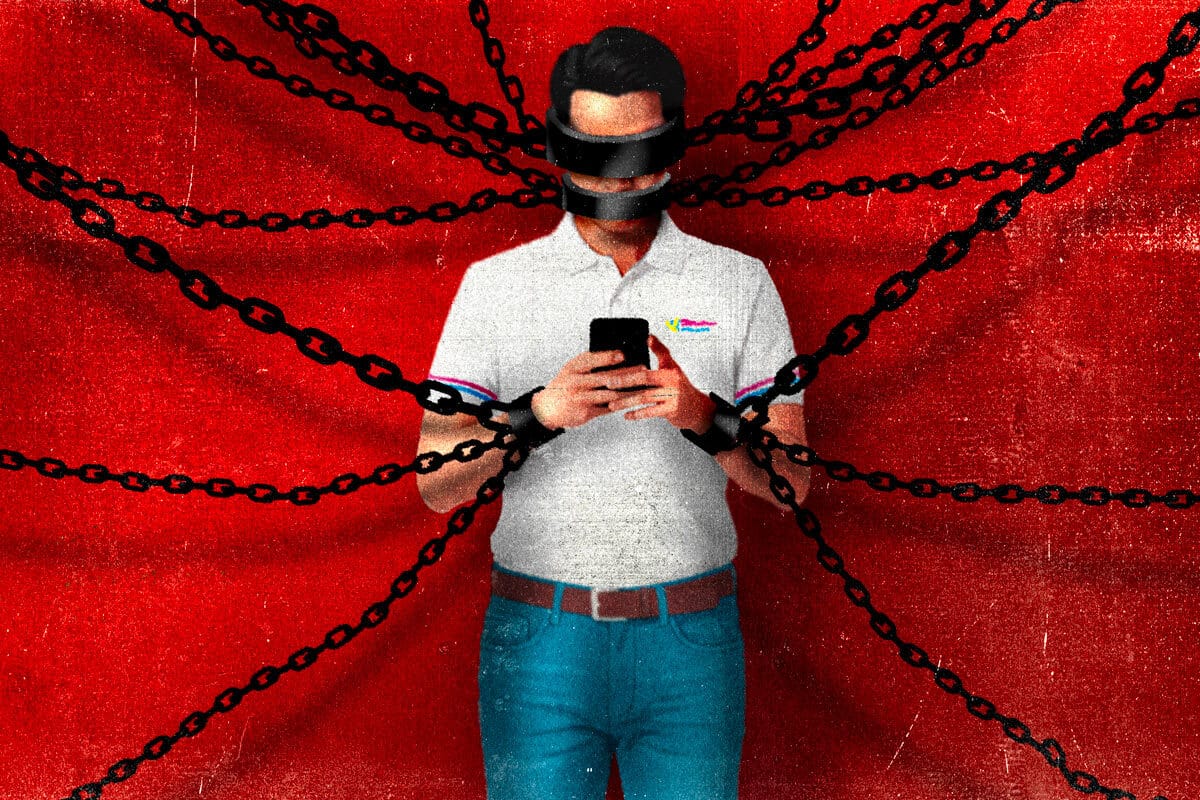
Tras la captura de Nicolás Maduro en un operativo de las fuerzas especiales de Estados Unidos, el régimen de Daniel Ortega y Rosario Murillo activó su aparato de vigilancia interna y control del discurso público en Nicaragua. Mientras los medios oficialistas se limitaron a reproducir la versión del Gobierno venezolano, empleados públicos y ciudadanos evitaron opinar por temor a represalias. El silencio interno es resultado de un aparato estatal diseñado para monitorear redes sociales, advertir a funcionarios y reforzar la censura en un país donde expresar una postura distinta tiene un costo
TL;DR
- The Nicaraguan regime reacted cautiously but subsequently increased internal surveillance and control after Nicolás Maduro's capture.
- At least 60 Nicaraguans were arrested following Maduro's capture, with detentions occurring without judicial orders.
- State workers, students, and militants were instructed to share propaganda demanding Maduro's release and denouncing the US.
- Surveillance measures include monitoring social media, messaging groups, and public statements for any criticism of Maduro or support for the US action.
- Nicaragua's official international stance was moderate, avoiding direct confrontation with the US, unlike other Maduro allies.
- Analysts suggest the regime's paranoia stems from the fear of a similar fate to Maduro and the potential for US-supported 'infiltration'.
- Nicaragua is mentioned in the background of the 'Cartel of the Suns' case as a drug trafficking route between Venezuela and the US.
The regime of Daniel Ortega and Rosario Murillo took almost 14 hours to officially comment after the capture of the Venezuelan dictator Nicolás Maduro by US military forces on January 3, 2026, an unusually cautious reaction compared to the explosive rhetoric that the Nicaraguan government usually uses against the North American country. However, after the late reaction, the co-presidents activated a state of paranoia throughout the country, which has resulted in the arrest of at least 60 citizens and an increase in police surveillance.
Apart from the official statements, the first dated January 3, when Trump overthrew Maduro, the national directive has been to confront the fall of the Chavista leader with the rhetoric that he was kidnapped and that the incursion of the military into Venezuela constitutes a violation of sovereignty. On the contrary, those who have echoed or celebrated Maduro's fall have been victims of Sandinista repression.
In contrast, the Ortega-Murillo regime opted to reinforce internal control. While the official discourse adopted a moderate tone without direct confrontation, the Sandinista dictatorship deployed surveillance in neighborhoods, public institutions, and social networks.
Sources linked to state institutions confirmed to DIVERGENTES that Rosario Murillo instructed the structures of the Sandinista National Liberation Front (FSLN) to activate monitoring mechanisms to detect publications on social networks, comments, or expressions that celebrated Maduro's arrest. Even, to report those who did not share any message of the official Sandinista propaganda, which is functioning as a sounding board for Venezuelan Chavismo.
Sandinista propaganda intensifies
And it is that, as part of the internal control strategy, the Ortega and Murillo regime also intensified the dissemination of official propaganda on social networks. State workers, university students, and Sandinista Front militants were instructed—confirmed sources linked to the public sector—to share publications demanding Maduro's immediate release and denouncing the United States for “breaking regional peace.”
One of the most widely disseminated images showed the flags of Nicaragua and Venezuela with the message “Nicaragua demands the immediate release of Nicolás Maduro and the restoration of peace in the region.” Another graphic piece, replicated in Sandinista groups, warns critics that they “renounce the cow, but take the milk,” alluding to those who question the government but benefit from its programs, which are paid for with the taxes of Nicaraguans whom they repress and censor.
Both pieces circulated from accounts linked to the Network of Communicators, 19 Digital, and FSLN structures, as part of a campaign of forced loyalty and ideological surveillance.
60 arbitrary arrests denounced by Monitoreo Azul y Blanco
On the afternoon of Friday, January 9, 2026, the organization Monitoreo Azul y Blanco, a civil network that monitors human rights violations in Nicaragua since 2018, reported that 60 Nicaraguans were kidnapped by the National Police, following Maduro's capture by US forces during the January 3 operation in Caracas.
These kidnappings occurred in Chontales, Matagalpa, Managua, Jinotega, Chinandega, Estelí, Granada, Masaya, and the North and South Caribbean regions, as part of the repressive and surveillance escalation unleashed by the Sandinista regime due to the worsening Venezuelan crisis.
“These detentions, carried out without a judicial order and based solely on expressions of opinion, constitute a serious violation of fundamental human rights,” denounced Monitoreo Azul y Blanco.
“Everything we post on social media will be reviewed”
According to sources consulted anonymously for security reasons, “political command posts” were activated in neighborhoods and public institutions, with the aim of gathering information on Nicaraguans who expressed sympathy towards the United States or shared critical opinions about Maduro. Surveillance included review of social media profiles, messaging groups, and public statements.
A worker from the Ciudad Sandino mayor's office, anonymously, reported that the staff of that entity were warned that “publishing something against Maduro or in support of what the United States did was treason to the Front (Sandinista). They say that everything we post on social media will be reviewed.”
A doctor working at the National Police's Carlos Roberto Huembes Hospital told this medium that in the hallways of that health center, no staff member, nor patients, refer to the Venezuela issue.
“It’s not that they have forbidden us to talk about Venezuela, but we all know that we cannot trust anyone, because doing so means running the risk of being accused of being traitors to the homeland for supporting the fall of a regime like Nicaragua’s,” the specialist expressed.
A lawyer working at the General Directorate of Revenue (DGI) stated that in that entity there were direct orders to monitor the social media and conversations of staff who showed sympathy for the US operation in Venezuela.
“The surveillance of people's social media is permanent, but now it is strictly directed at those who talk about Venezuela and more so for those who celebrate Maduro's capture. There is an order to watch each other,” said the source.
Between censorship and fear to get informed
The source linked to the Carlos Roberto Huembes hospital explained that many health sector workers and other public employees seek alternative information about Venezuela in international media and independent exile platforms, due to the lack of critical coverage in official channels.
According to this source, people closely follow the reports on the federal charges that Nicolás Maduro faces in the United States, including drug trafficking, narco-terrorism, and conspiracy to import cocaine, which led to his transfer to New York and his appearance before a federal court, where he pleaded not guilty. This information, omitted in the official narrative, circulates widely on social networks.
“One reviews international news on social media, but then one has to delete everything because even that represents a risk. We know that we cannot rely solely on what the government media says. Also, for chatting, we have activated the option for conversations to be deleted as soon as possible,” relates the source.
A monitoring of media outlets that still operate in Nicaragua and are not directly owned by the Ortegas-Murillos revealed that after Maduro's capture, their news reports have not independently highlighted the operation in Venezuela, let alone developed critical coverage of it, as happens with the official media.
In the days following the arrest, their informational work has largely been limited to reproducing the reactions of the Sandinista government or reprinting official statements, without delving into the context or implications of the event.
According to the sources consulted, the official narrative in Nicaragua focuses on presenting Maduro's capture as a “kidnapping by the United States,” without contextualizing the criminal charges or the legal grounds that have driven the US action.
The international caution of the Ortegas-Murillos
While in the streets of Nicaragua, Sandinismo unleashes its paranoia, internationally it appeals to caution. In the statement published on January 3 in the propaganda medium 19 Digital, the regime limited itself to saying that it accompanied “with heart the call of the Vice President of Venezuela, companion Delcy Rodríguez, to defend truth, justice and life, and to demand the immediate release of the president, companion Nicolás Maduro and companion Cilia Flores”.
Despite Venezuela being their main political ally in the region, Nicaragua opted for a moderate and unassertive stance in its official statement. The statement limited itself to describing what happened as a “violation of peace” and calling for respect for sovereignty, but avoided directly mentioning the United States or describing the operation as an aggression, unlike other Maduro allies such as China and Russia, who strongly condemned the capture, demanded the release of the Venezuelan ruler, and described the act as a serious violation of international law.
In Latin America, Cuba, Mexico, Brazil, Colombia, and Chile also rejected the US military action, considering it a threat to regional sovereignty, and did so in much stronger terms than the Ortega-Murillo regime. The contrast highlights a meager and calculated support from Nicaragua, in an apparent attempt to avoid open confrontations with the United States.
Two days after the operation, on January 5, Nicaragua presented its position before the UN Security Council. Ambassador Jaime Hermida demanded Maduro's immediate release and reiterated the need to respect the sovereignty of states.
The message appealed to the principles of non-interference and self-determination, without directly referencing the drug trafficking charges or holding the United States responsible. Hermida insisted that Latin America must remain a “zone of peace,” without contributing its own elements or issuing an autonomous political stance.
Nicaragua as a drug trafficking transit zone
Although Nicaragua is not listed in the current indictment filed in New York against Nicolás Maduro, it is mentioned in the background of the Cartel of the Suns case as part of a drug trafficking route between Venezuela, Central America, and the United States. One of the episodes described by US authorities indicates that cocaine left Venezuela, passed through Nicaragua, and continued towards Mexico before reaching its final destination.
The judicial document presented by the Department of Justice makes general reference to “Central America” as a strategic corridor, leaving open the possibility that Nicaragua may be pointed out again as the trial progresses. Although there is no direct indictment against the Ortega-Murillo regime, analysts warn that the country's institutional weakness and its closeness to Caracas have made it a key point in regional trafficking, according to previous State Department reports.
Analysts and regime critics have highlighted that the omission of Nicaragua in the current indictment does not exempt the Ortega regime from international scrutiny. On the contrary, it reinforces the diplomatic calculation that has guided its response to the Maduro case.
A warning for Ortega and Murillo: see themselves in Maduro's mirror
Senator Rick Scott stated on Fox News that the capture of Nicolás Maduro by the United States represents a turning point for Latin America and could trigger broader political changes in the region.
According to Scott, Maduro's arrest will be the beginning of a transformation in Venezuela, which will subsequently extend to countries like Cuba and Nicaragua, and will pave the way for new leadership in Colombia. “Democracy is returning to this hemisphere,” he assured in his intervention on the program, in which he linked the US administration's action with a perspective of expanding democracy on the continent.
“What worries Ortega and Murillo right now is not so much a military attack from the United States, but successful infiltration as happened in the ranks of Chavismo,” says Eliseo Núñez, a political analyst and formerly denaturalized opposition deputy.
“The couple sees the handover of Maduro by the Rodríguez brothers to the United States as a mirror of their own environment. That is, if they could do it in Venezuela, where there is a state with more resources to distribute, in Nicaragua with much less it could be easy for the United States to break the backbone of their security forces. That is where the paranoia we are seeing comes from, and also that the Venezuelan case could encourage opponents to protest in the streets with the hope of being protected by the international community,” he added.
Lawyer and analyst Juan Diego Barberena has suggested that “Operation Absolute Resolution” not only weakened the Chavista leadership but also forces the Orteguismo to face an uncomfortable reality.
In his column “The mirror of Maduro in which the Ortegas-Murillos see themselves”, published in this medium, Barberena observes that the Venezuelan president's detention “highlights the internal erosions and contradictions” of authoritarian power, and has an “exemplary” character for similar governments in the region.
Barberena maintains that the US operation reveals deep vulnerabilities that are also present in Managua's political project, from institutional fragility to tensions surrounding the succession of power. In his words, “Forcing the Ortegas-Murillos to see themselves in the mirror of Maduro, who because he did not know, nor want to leave, ended up in prison” reflects both internal fear and the need to reconfigure strategies in the face of an increasingly uncertain international scenario.
This reading gains weight in a context where the Nicaraguan regime seeks to avoid direct confrontation with the United States amid structural economic vulnerability. The fall in foreign investment, dependence on remittances, and stagnation of regional trade place Nicaragua in a delicate position in the face of possible additional sanctions or financial pressures from Washington.
##### The information we publish in DIVERGENTES comes from verified sources. Due to the situation in the region, we are often forced to protect them under pseudonym or anonymity. Unfortunately, some governments in the region, with the Nicaraguan regime at the head, do not offer information or censor independent media. Therefore, despite requesting it, we cannot have authorized official versions. We resort to data analysis, anonymous internal sources, or limited information from official media. These are the conditions under which we practice a profession that, in many cases, costs us our safety and our lives. We will continue to inform.
### Related