economy
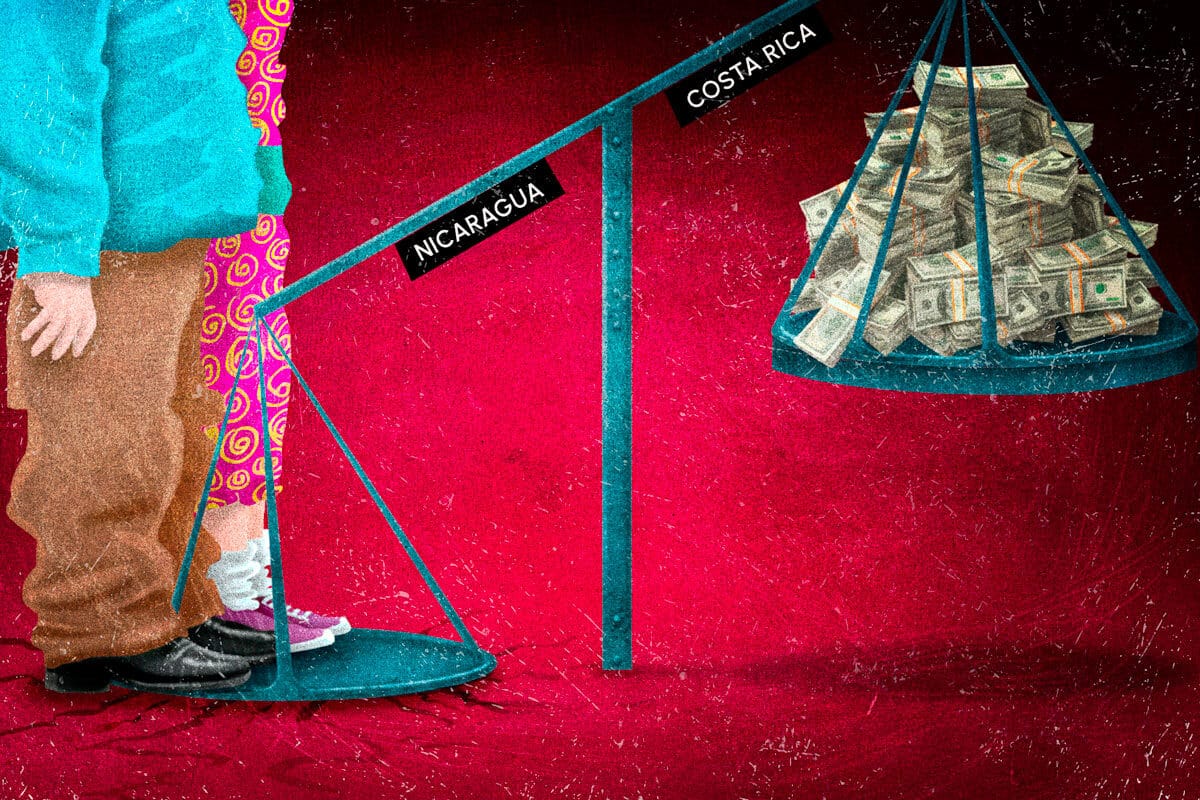
Nicaragua compra a Costa Rica tres veces más de lo que le vende
Aunque Costa Rica figura entre los principales destinos de las exportaciones nicaragüenses, la balanza comercial entre ambos países es desigual. De acuerdo con expertos, este desequilibrio se explica por la alta dependencia de la economía nicaragüense hacia bienes industriales, alimentos procesados y productos manufacturados costarricenses, que no se producen localmente
TL;DR
- Costa Rica maintained a significant trade surplus with Nicaragua in 2025, with exports three times the value of imports.
- Nicaragua's exports are primarily raw materials and minimally processed goods, while Costa Rica exports industrial, manufactured, and processed items.
- Nicaraguan economist Marco Aurelio Peña states Nicaragua's economic scheme lacks incentives for industrial development, transformation, and innovation.
- The article suggests Nicaragua's political situation, characterized by a lack of legal certainty and state intervention, undermines competitiveness.
- Néstor Avendaño estimates US tariffs will decrease Nicaragua's total merchandise exports by 13.1% in 2026.
In 2025, Costa Rica maintained a broadly favorable trade balance with Nicaragua. Costa Rican exports tripled the value of products imported from that country. The commercial relationship reflects a sustained dependence of the northern neighbor on industrial, manufactured, and processed goods that it does not produce locally.
According to the Central Bank of Nicaragua and official reports, from January to September 2025, total exports (merchandise and free trade zone) from this country amounted to 6813.9 million dollars, a 15.8% increase compared to the same period in 2024. This progress was driven mainly by merchandise exports, which grew by 27.6% in the accumulated period up to September last year.
However, a generalized trade deficit persists. For example, in August 2025 alone, the country registered a negative balance of 161.1 million dollars, with imports reaching 925 million, compared to exports of just 764 million.
The situation is reflected in the bilateral relationship with Costa Rica. In 2024, according to the latest records from the COMTRADE platform, the United Nations' official database for international merchandise trade statistics, Costa Rica exported goods worth more than 737 million dollars to Nicaragua, while Nicaragua only managed to sell products worth 224 million to Costa Rica. This confirms a gap of more than three times in favor of the neighboring country.
For 2025, based on the growth rates reported by the official institutes of both countries, it is estimated that Costa Rica exported more than 840 million dollars to Nicaragua, while Nicaragua would only reach 286 million, widening the negative balance to more than 554 million dollars.
What is sold and what is bought
The most recent COMTRADE data confirms that the trade gap between Costa Rica and Nicaragua is reflected not only in total amounts but also in the type of products exchanged. While Costa Rica mainly exports industrial and manufactured goods with added value to Nicaragua, Nicaragua sells primary products or those with little processing to its southern neighbor.
In 2024, the five main products Costa Rica sold to Nicaragua generated revenues of more than 278 million dollars, representing more than a third of the total exported that year. The list is led by miscellaneous food preparations (82.8 million), followed by iron and steel (70 million), plastics (48.7 million), pharmaceutical products (43.7 million), and miscellaneous chemical products (33.4 million).
This structure reflects a clear competitive advantage for Costa Rica in sectors with higher industrial development, where there is productive linkage and incorporated technology. The products it places on the Nicaraguan market not only have greater economic value but also add employment, innovation, and productivity to its own economy.
In contrast, Nicaragua continues to depend on traditional exports to Costa Rica. In 2024, the most important category was edible meat and offal (57.4 million). This is followed by edible vegetables, roots and tubers (21.3 million), fruits and citrus peels (19.5 million), seafood (15 million), and animal or vegetable fats (13.2 million).
Although these are products with demand in the regional market, their low level of processing limits opportunities to generate higher income or expand their international presence.
Structural deficit and lack of strategy
According to Nicaraguan economist Marco Aurelio Peña, the deficit that Nicaragua maintains with Costa Rica is not solely a commercial issue. It is a reflection of a limited economic scheme, without clear incentives for industrial development, productive transformation, and innovation. In his analysis, the country's economy remains anchored to raw materials and traditional exports, lacking the capacity to compete in more complex segments.
“We are seeing two countries that focus much of their economy on exports, but Costa Rica's export effort is greater than Nicaragua's export effort. This can be compared by virtue of their total exports,” Peña indicated.
He also pointed out that Costa Rica, in terms of economic complexity and the added value of its export products, also leads the sales effort in Central America. “It already exports medical devices and IT services, compared to Nicaragua, which has only stuck to its traditional products, mainly agricultural products, as an international seller,” he added.
Nicaragua buys products that it sells
The expert also noted that Nicaragua, instead of modernizing and betting on the “knowledge economy,” has comfortably settled for exploiting its primary products.
“A relevant case is gold. The country exports raw gold, instead of creating a local industry to process it. Gold could be transformed into jewelry, rings, bracelets, chains… but it leaves without added value. It is not strange that Nicaragua then ends up buying that same processed gold, but made in another country, like China, for example,” he indicated.
Adding to this lack of strategy is institutional isolation. The Ministry of Development, Industry, and Commerce (MIFIC), for example, has not announced any policy specifically aimed at reducing the gap with Costa Rica. Export associations face bureaucratic barriers and lack technical and financial support to innovate or internationalize their production.
The cost of dictatorship on the national economy
According to Peña, Nicaragua's export lag also has political roots because Nicaragua has completely abandoned its institutional and democratic governance, unlike Costa Rica. The lack of legal certainty and the use of the state apparatus to intervene in the economy undermine the country's competitiveness.
“Costa Rica has a lower country risk, it is a democratically stable country with strong economic institutions and high international credibility. It has positioned itself better in the market niche and, as a country brand, has a better reputation,” he commented.
In contrast, the finance specialist pointed out that the regime prioritizes political control over economic development. The institutions responsible for economic policy operate as subordinate apparatuses to power, without technical autonomy or planning capacity. In this context, the private sector faces unequal rules, legal uncertainty, and political pressures that limit any attempt at diversification or growth.
“In the business sphere, there is inequality before the law. Some businessmen have privileged connections with the Government, which prevents fair competition. All this generates economic discontent: structural unemployment, very high levels of informal employment and underemployment. Underemployment becomes a lifeline for those who cannot access formal employment with social security and benefits,” Peña detailed.
He also indicated that education and technical training—key factors for sustainable economic growth—have been deteriorated by repression, censorship, and political control.
Costa Rica advances, Nicaragua stagnates
Nicaragua continues to focus its foreign trade on traditional agricultural products, without moving towards goods with higher added value. DIVERGENTES/EFE.
In this context, while Nicaragua remains trapped in an extractive model, Costa Rica is advancing in productive diversification, technological innovation, and international positioning. “It has strong economic institutions, democratic stability, and international credibility,” said Peña. This has allowed it to consolidate itself as a regional supplier, attract foreign investment, and lead strategic sectors such as agribusiness, services, and the medical industry.
Nicaragua, on the other hand, continues without changing its productive structure. “No structural change is apparent. Certain positive numbers are simply presented to say that we are not in recession, but the opportunity cost of having a dictatorship is very high,” warned Peña.
External vulnerability and export decline
The fragility of Nicaragua's export structure is not limited to the trade deficit with Costa Rica. It also faces external pressures that highlight its vulnerability, especially due to its strong dependence on a small number of markets and products.
Economist Néstor Avendaño warned in an analysis published on his blog, that Nicaraguan exports face a new adverse scenario after the entry into force of US tariffs since August 2025. In his analysis, he estimates that “the value of Nicaragua's total merchandise exports in 2026 will decrease by 13.1% (equivalent to 477.9 million dollars) as a result of the 18% tariff imposed by the United States,” which will directly affect key sectors such as meat, coffee, harnesses, and textiles.
This type of external vulnerability highlights the structural limitations of the Nicaraguan export model, focused on primary goods, with little diversification and without consolidated value chains. According to Avendaño, Nicaragua “has not corrected the problem of dependence on a single market for its goods exports,” leaving its economy exposed to trade fluctuations and unilateral decisions by its most powerful partners.
The case with Costa Rica, therefore, is not isolated. It repeats the pattern of a country with a weak and technologically underdeveloped export offer, compared to neighboring economies that have opted for added value, diversification, and strategic positioning. The consequence is a growing competitive disadvantage and a sustained loss of economic opportunities.