politics
декабрь 25, 2025
What Nicaragua stands to lose if Trump expels it from CAFTA and imposes 100% tariffs
An investigation by the Office of the United States Trade Representative (USTR) has opened the door to suspending Nicaragua’s participation in the DR-CAFTA free trade agreement and imposing tariffs of up to 100%, a move that would severely threaten the Ortega-Murillo regime’s economic model. The Sin Límites Foundation warns of massive job losses and a contraction in Gross Domestic Product (GDP), while analyst Manuel Orozco predicts disinvestment, corporate flight, and financial isolation should trade relations with Washington collapse
TL;DR
- The USTR has recommended suspending Nicaragua's DR-CAFTA benefits and imposing tariffs up to 100% on its exports.
- This action is due to the Ortega-Murillo regime's "unreasonable" policies and practices constituting a "burden on U.S. commerce."
- Nicaragua's economy relies on the U.S. for over 55% of its exports, making these sanctions potentially devastating.
- Expulsion from DR-CAFTA could lead to massive losses in the maquila textile sector, an estimated 80% decline within a year.
- The government could exhaust reserves within a year, face debt default, and financial isolation.
- An estimated 125,000 to 135,000 formal-sector jobs could be lost, shrinking real GDP by 4% over two consecutive years.
- Nicaragua's economic model rests on DR-CAFTA, export processing zones, and remittances, all dependent on the U.S.
- The government might be forced to raise taxes or slash social spending, deepening recession.
- The investigation is already discouraging investment and potentially causing businesses to leave Nicaragua.
- Sectors like tourism and foreign exchange transactions, as well as financial de-risking, could also be affected.
- Economists estimate that maquila workers, gold sector workers, and seasonal agricultural workers are among those potentially impacted.
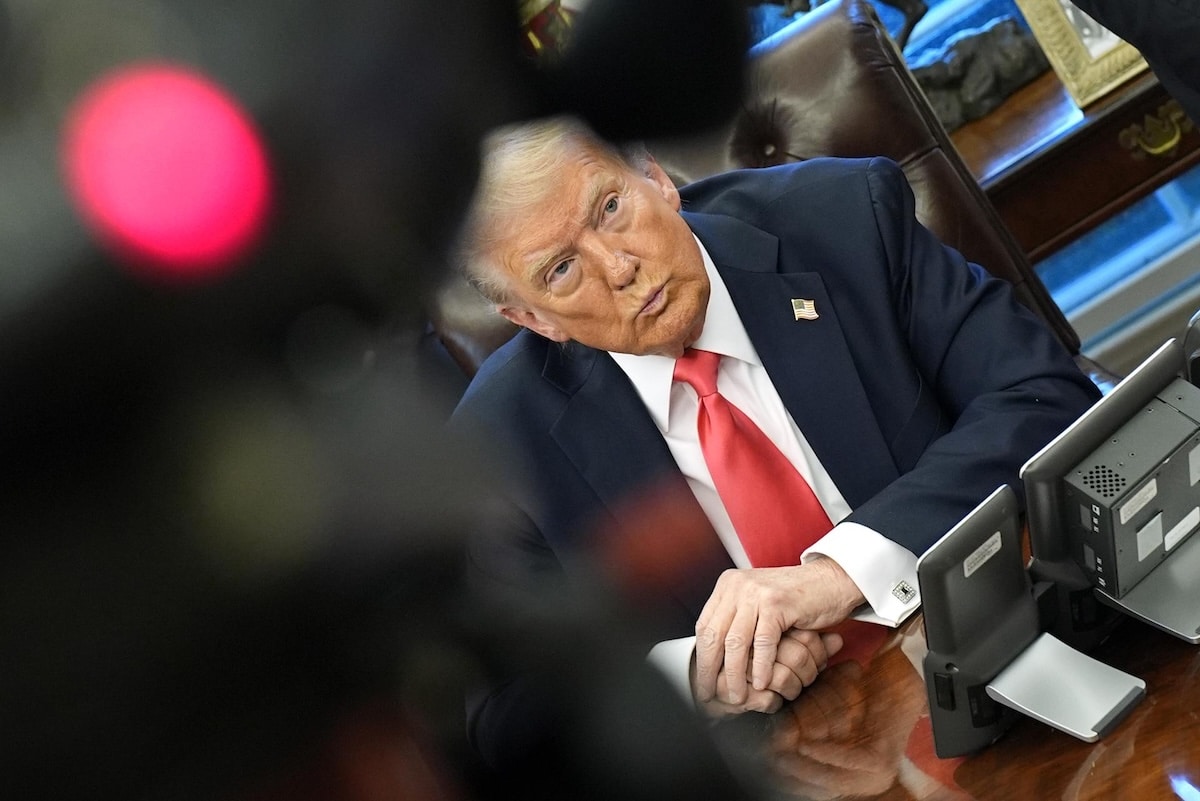
The Office of the United States Trade Representative (USTR) has placed Nicaragua’s file squarely on Donald Trump’s Resolute Desk in the Oval Office. The verdict is unequivocal: the policies and practices of the Ortega–Murillo regime are “unreasonable” and constitute a “burden on U.S. commerce.”
Laid before the Republican president are the harshest economic sanctions in two decades, since Washington solidified its position as Managua’s primary trading partner: the full or partial suspension of Nicaragua’s benefits under the DR-CAFTA free trade agreement and the imposition of tariffs of up to 100% on its exports.
The impact of such a decision, still in a public consultation phase until November 19, would be devastating for an economy that relies on the United States for more than 55% of its exports. The gravest fear is Nicaragua’s expulsion from the DR-CAFTA agreement, a possibility that has been discussed in Washington corridors for years but was always considered extreme due to the treaty’s lack of a democracy clause. However, sources in Washington told DIVERGENTES that this exclusion has never been closer to reality than it is today.
The clearest sign that Nicaragua may be pushed out of the agreement is that, over recent weeks, other Central American countries have been holding discussions with the Trump administration about tariffs, while the Ortega-Murillo regime has been conspicuously excluded from these talks.
Although tariff imposition, consistent with the Trump administration’s broader protectionist stance, even toward key allies, could be one measure taken against the Ortega-Murillo regime, the prospect of DR-CAFTA expulsion is far more alarming. Since this possibility first emerged, organizations like the Sin Límites Foundation have worked to assess its potential impact on Nicaragua’s economy and citizens.
The foundation, operating in exile, warns that “this would critically affect industries such as the maquila textile sector, which could suffer massive losses and even face extinction, with an estimated 80% decline within a year.” Their sustainability study adds that “after exiting DR-CAFTA, the government would exhaust its reserves within a year, forcing it to swiftly implement policies to avoid defaulting on debt and becoming financially isolated.”
“Moreover,” the foundation cautions in its projections, “between 125,000 and 135,000 formal-sector jobs would be lost, negatively impacting household consumption, private investment, and exports, potentially shrinking real GDP by 4% over two consecutive years.” In such a scenario, informal employment would absorb part of the shock, but with significantly lower incomes and insufficient capacity to sustain domestic demand.
Thus, the real question is no longer whether Nicaragua can withstand losing its main trading partner, but how quickly its productive structure would fracture. Nicaragua’s economic model rests on three pillars: CAFTA-DR, export processing zones (maquilas), and remittances, all fundamentally dependent on the United States.
On the fiscal front, the organization argues that “the government would be forced to raise taxes or slash social spending to maintain budgetary balance,” actions that “would deepen the economic recession and impose heavy costs on Nicaraguan households and businesses.”
Sin Límites concludes that “withdrawal from DR-CAFTA would have profound implications for growth, macroeconomic stability, and public debt sustainability. In practice, it would mean a return to a closed, stagnant economy.”
“In conclusion,” the foundation states, “scenario-building has allowed us to glimpse potential fiscal sustainability outcomes. The analysis shows no definitive answer; rather, it reveals a range of possibilities, some indicating that the government may become fiscally unsustainable, though others suggest it could reverse this trajectory by intensifying pressure on households and private enterprises through both revenue collection and expenditure controls.”
An Investigation That’s Already Discouraging Investment
Manuel Orozco, an economist at the Inter-American Dialogue, warns that one of the most likely consequences of this investigation is that “some businesses will choose to leave the country out of fear of punitive tariffs exceeding 20%, as initially happened with China.”
According to Orozco, companies seeking to avoid 100% tariffs or retain DR-CAFTA benefits will need to present solid arguments, not fall back, he cautions, on lobbying narratives about “tariffs, unemployment, and migration.”
Orozco notes that merely announcing the investigation “discourages companies already struggling with higher tariff rates compared to other DR-CAFTA members.” In his view, the process triggers multiple reactions: commercial and service-sector lobbying (including tourism) pushing for non-punitive measures; the regime possibly attempting to re-engage with the U.S.; and firms with operations in Central America’s Northern Triangle seeking to relocate.
Regarding the hardest-hit sectors, Orozco identifies “foreign-owned maquila enterprises (fewer than 125, one-third of them American) that export 70% of their total output to the United States.” He also notes that “10% of Nicaraguan exports to the U.S. consist of gold, companies like miner Calibre account for half of that, and another 20% comprises coffee, bananas, beef, tobacco, and other products, many owned by Nicaraguan businesses.”
Within the scope of potential measures, Orozco warns that “services like tourism and foreign exchange transactions involving the U.S. dollar could also be affected.” He further cautions about possible financial de-risking: “The U.S. financial sector might sever ties with Nicaraguan-based companies due to high perceived risk, given the report’s damning characterization of the regime as acting against U.S. commercial interests.”
According to the Inter-American Dialogue analyst, the regime might try to pressure “friendly or maquila-based entrepreneurs not to leave the country.” He estimates that “over 1,000 Nicaraguan companies are directly affected, those handling production and export of agro-industrial goods.” Nicaragua, he adds, “has a labor force of 3 million workers; over 80% work in the urban economy, three-quarters of them informally. Agricultural labor is split between export-oriented sectors, gold, crops, and domestic food production.”
Orozco estimates that “those potentially impacted include roughly 120,000 maquila workers (including some in service roles like call centers), 35,000 in the gold sector, and over 200,000 seasonal agricultural workers.”
“This isn’t a zero-sum game,” he summarizes, “but this impact is fundamentally the result of the Ortega-Murillo regime’s actions against its own people.” On the business side, he recalls that “as of 2017, only 2% of Nicaraguan businesses operated in the export sector; the country has 150,000 formal enterprises.”
“The trade matrix and national economy show that export earnings contribute less than 20% to national accounts, as these exports operate within economic enclaves,” he explains.
In his analysis, Orozco asserts that “for the United States, the logical step is to remove Nicaragua from DR-CAFTA. The actions toward Nicaragua are punitive and proportionate to the dictatorship’s conduct; there is no negotiation posture, let alone dialogue. That lies entirely in the regime’s hands. To mitigate the risks of even a minimal decision on Nicaragua, it’s essential to propose a moratorium, but only if accompanied by concrete, positive, and proactive changes in Nicaragua’s stance, including a clear roadmap toward democratic transition.”
The information we publish in DIVERGENTES comes from contrasted sources. Due to the situation in the region, many times, we are forced to protect them under pseudonymity or anonymity. Unfortunately, some governments in the region, including the Nicaraguan regime, do not provide information or censor independent media. For this reason, despite requesting it, we cannot rely on official, authorized versions. We resort to data analysis, anonymous internal sources, or limited information from the official media. These are the conditions under which we exercise a profession that, in many cases, costs us our safety and our lives. We will continue to report.